


Sign Language – an open access collection
Every year in March, Sign Language Week marks the recognition of British Sign Language (BSL) as an official language by the UK Government on 18 March 2003. Running from 16 to 22 March, the week raises awareness of British Sign Language and Irish Sign Language (ISL), as well as the communities who use them.
To mark Sign Language Week, we’ve curated an open access collection that brings together research, theory and practice from across sign language studies. While BSL and ISL are central to this collection, it also includes titles exploring a wide range of sign languages from around the world, reflecting the linguistic diversity and global reach of Deaf communities.
Below are five titles that highlight different approaches to sign language research.
1. Sign Language Research, Uses and Practices by Laurence Meurant, Aurélie Sinte, Mieke Van Herreweghe and Myriam Vermeerbergen (eds.)
In this edited volume, sign language research and Deaf community practice are treated as inseparable. The chapters address areas including interpretation, bilingual language development and sign language structure, alongside methodological questions central to the field.
With contributions from both established and emerging scholars, the book engages with current debates and methodological approaches across sign language studies. It will be of interest to students and researchers in linguistics and Deaf studies, as well as those engaged with sign language education and interpretation.
2. Formational Units in Sign Languages by Rachel Channon and Harry van der Hulst (eds.)
This book explores how sign languages are structured and how they differ from spoken languages. Rather than treating sign languages as variations on spoken language, it considers how meaning is built through movement, space and the body.
Drawing from sign languages across multiple regions, including village and home sign contexts, the volume offers insight into debates about language structure and human cognition. The book will appeal to linguistics students and researchers, as well as readers interested in how language works beyond speech.
3. Mouth Actions in Sign Languages: An Empirical Study of Irish Sign Language by Susanne Mohr
Focusing on Irish Sign Language, this book examines mouth actions in signed communication, linking detailed linguistic analysis with Deaf community contexts. Mohr provides a close account of how facial and mouth movements function as part of the linguistic system, rather than as secondary features.
By treating mouth actions as integral to linguistic structure, this book will be of interest to students and researchers working in sign language linguistics with a descriptive or applied focus.
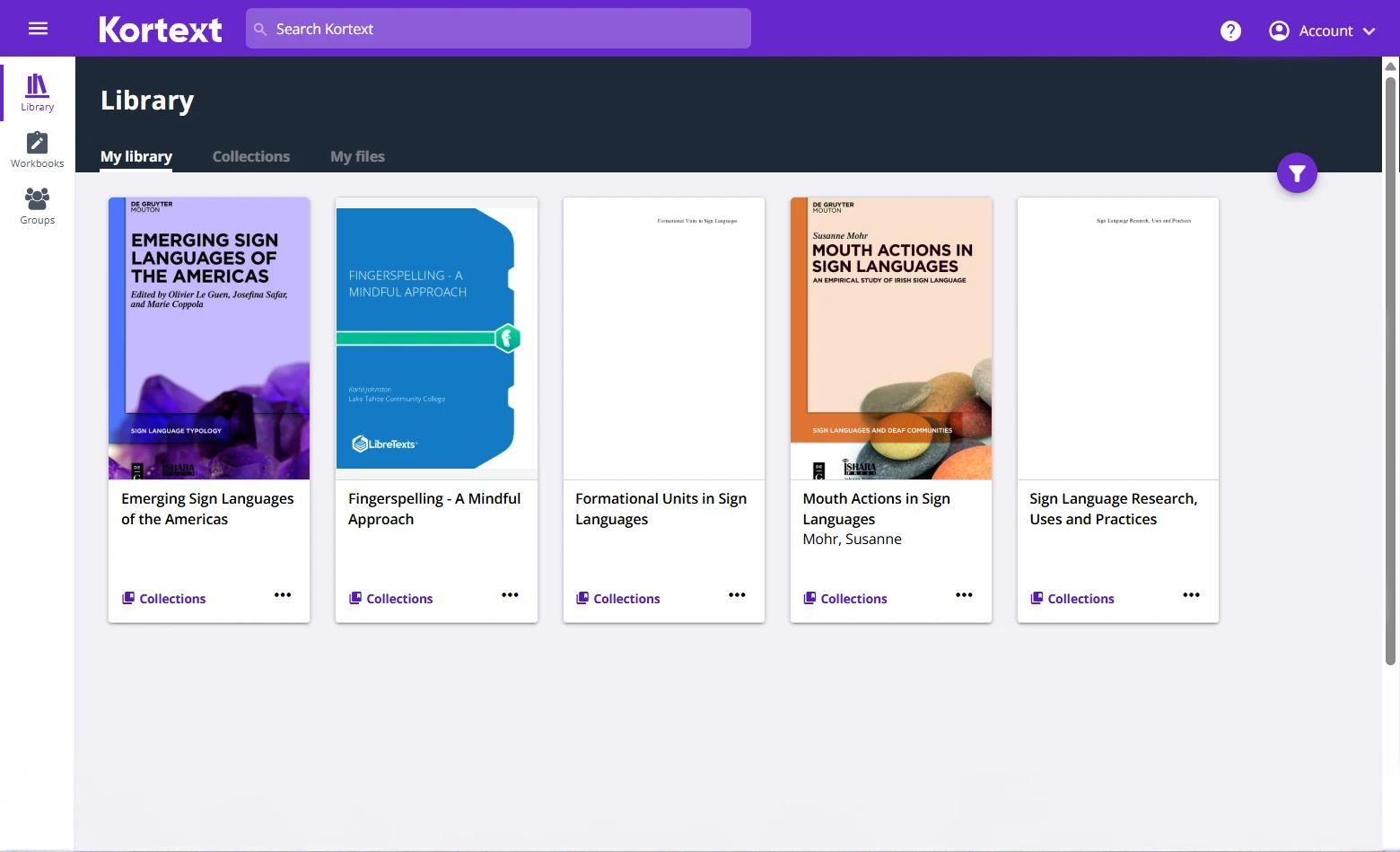
4. Emerging Sign Languages of the Americas by Oliver Le Guen, Josefina Safar and Marie Coppola (eds.)
Across the Americas, emerging sign languages offer insight into how signed communication develops within Deaf communities and through interaction with hearing populations. Drawing on case studies from Mexico, Brazil and the Caribbean, the book explores how shared gesture and community practices contribute to the formation of new sign languages.
Bringing together linguistic and sociolinguistic perspectives, the volume highlights the social and cultural foundations of language emergence. The book will appeal to readers interested in language evolution and the relationship between communication, community and culture.
5. Fingerspelling – A Mindful Approach by Karla Johnston
This practical guide approaches fingerspelling as both a technical and reflective skill. By combining mindfulness with language learning, it encourages readers to develop greater clarity, intention and confidence in fingerspelling practice.
This approach is particularly valuable for supporting gradual, sustained skill development in learning, teaching and interpreting contexts. Students, interpreters and both Deaf and hearing signers will find the book offers an accessible route into improving expressive accuracy while developing a more reflective approach to language use.
To access our new collection, please contact your Kortext Account Manager for more information.
You don’t have to be an existing Kortext customer to benefit from our Open Resources Collection. To find out more, talk to us today.