
Why university students need sleep (and no, not just 3 hours of it)
Written by Kortext ambassador Biba and reviewed by our team.
Let’s set the scene. It’s the night before possibly the biggest exam of your university life. It’s 12am, you have 70 tabs open as well as pen, paper, highlighters and your whole Apple ecosystem.
You are already tired but still have 8 topics to get through… but at least you’ve got caffeine and snacks, the motivation that comes from academic panic, and the unshakeable belief that you can absorb an entire semester’s worth of content before 9am. Surely that’s enough, right?
As highlighted in the Claudia Aguirre TED talk, when 17-year-old Randy Gardner stayed awake for 11 days straight, by day three he was moody and uncoordinated and by the end he was hallucinating, paranoid and struggling to string a sentence together.
Now you might not be pulling 11 days, but it only takes 48 hours to lose it. Sleep deprivation does not just make you tired. It breaks down your ability to think, remember and function.
The moment you started sacrificing sleep for late night cram sessions, your brain began quietly working against you. The glymphatic system, your brain’s own in-house waste management service, is responsible for flushing out toxic buildup from your brain cells.
But here’s the thing… It only operates properly when you’re asleep. Miss out on sleep and all that waste stays put, clogging up your neural pathways like a blocked drain. That’s not a metaphor. That is literally what is happening behind your eyes right now.
What happens when you sacrifice sleep?
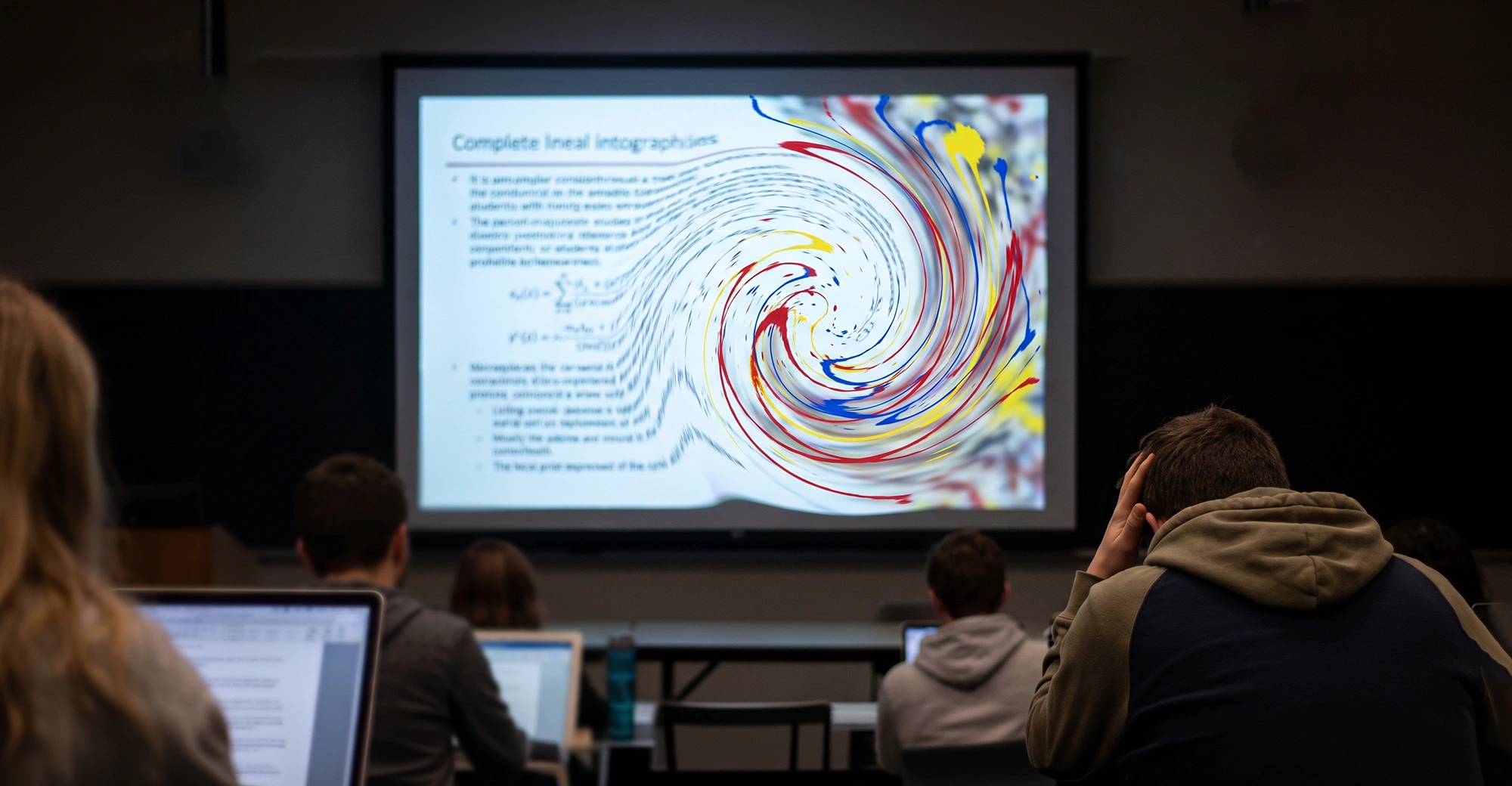
The result? Brain fog. That state where the words on your lecture slides start to look less like economics and more like a Jackson Pollock painting. The term “brain fog” directly comes from the science of waste products building in the brain and slowing cognitive function to a crawl.
It’s now 2:20am, 3 topics down you’re exhausted – do you sleep? NO! You crack open a white peach energy drink as a coping mechanism. But in reality it’s a carbonated lie. You take a sip and on pure placebo, you feel sharper. Your fingers move faster. You reach a flow state. Everything is good.
Here’s what’s actually happening. As highlighted in the Claudia Maguire TED talk, all day your brain has been building up a chemical called adenosine, which creates that heavy, tired feeling signalling your body it’s time to sleep.
By 2am, those levels are very, very high. Caffeine doesn’t remove the adenosine; it simply blocks the receptors that tell your brain how exhausted you actually are. The tiredness doesn’t go anywhere. It just waits patiently in the background, like a particularly vindictive lecturer.
Then a few hours later, the caffeine wears off. Every last bit of that built-up fatigue crashes into you at once, right as you’re sitting down to write your exam. Personal experience confirms it is entirely possible to be so sleep-deprived that you cannot properly read the exam paper in front of you. Not ideal as a final year student.
Beyond the fog and the caffeine crash, there’s the small matter of whether any of this last-minute cramming is actually sticking… it’s not. When we learn something new, we begin forgetting it almost immediately, a phenomenon known as the forgetting curve.
Within 20 minutes, a significant portion of what we just studied starts to fade. Now imagine layering that on top of severe sleep deprivation. You’re essentially trying to fill a bucket with holes in it.
Sleep is not just rest, it’s when your brain actually does the learning. During sleep, your brain processes the day’s experiences, sorts through new information, and consolidates memories, grouping new knowledge alongside existing ones.
This is why ‘sleeping on it’ genuinely helps. Your brain files the content you studied in the afternoon, connects it to other concepts and strengthens it overnight. Skip sleep, and that consolidation never happens. All those hours at your desk essentially disappear.
The solution
Most adults need 7 to 9 hours of sleep and university students are no exception. Sleep isn’t a luxury you earn after studying, it’s the mechanism by which studying actually works. Memory consolidation, focus, emotional regulation, and cognitive performance all depend on it.
If you’re genuinely tired and can no longer see straight, get into bed. A few hours of real sleep will do more for your exam performance than another three hours staring at notes through a wall of fog.
Your brain strengthens memory recall during sleep, meaning content you studied earlier in the week is actually more accessible after sleep than after a night of panicked cramming.
And if you absolutely cannot avoid the night-before situation – I’ve been there, we all have – at a minimum set an alarm and get some sleep. Even a few hours is better than none.
Your brain needs REM sleep to repair, consolidate and recall knowledge. If not, by exam question 3, your brain may just shut off and take a very inconvenient nap.
So if there’s one thing to take away, remember to: Eat, SLEEP, study, repeat.
Did you know that Kortext is awake at all hours?
Whenever motivation strikes, day or night, your course reading will be waiting – click here to log in.