

What is academic reading?
We all approach different texts differently. For example, you’d read a novel in a different way than reading the newspaper, even though you may not notice that you’re doing it.
With academic reading, it’s important to approach it with a specific mindset and strategy because it is so different – as is the purpose. When you’re reading academic texts, you’re reading them critically which basically means you need to adjust your gaze and focus on what information you need to find that will be both meaningful and useful to you and the assignment you’re working on.
How do I begin reading academically?
Before you can begin any academic reading, it’s recommended that you pause for a moment and think about, or even jot down, the reason you’ll be reading the text.
Is it to delve deeper into a topic that was touched upon in a lecture? Is it to support a point you’d like to make in an essay? Is it to answer a question, or is it for supplementary knowledge to give you a well-rounded view?
Having this in mind and on paper is a really useful way to give your reading purpose and keep you on track because you’ll be motivated to find exactly what it is you’re looking for, even when doing wider reading.
Wider reading
Wider reading is a term that’s used often at university. Wider reading and selecting additional content can help you reach those top grades. This doesn’t necessarily mean you have to read everything, because that’ll be impossible, and it may even have the opposite effect and make you want to stop your course!
But how do you know what to read?
It’s simple – ask yourself: “What am I trying to find out?”
This will help you to select relevant texts to read and narrow down which sections will be useful to you. The ability to be selective in your reading is undeniably one of the most important skills you’ll develop when it comes to academic reading.
You can also think about the keywords you want to explore and, if reading your text digitally, you can usually search the book for relevant words or phrases to narrow down your reading.
Active reading
To be efficient at reading academically, you need to read actively.
If you think that by reading academic texts over and over again, the information will somehow embed itself into your brain, you’ll be sad to know that you’re wrong. You’ll be more likely to fall asleep and forget what you’ve read because all you’ll be doing is passive reading.
To remember what you’re reading, you need to be active and engaged with it by taking notes and creating connections between what you’ve read and the reason you’re reading it.
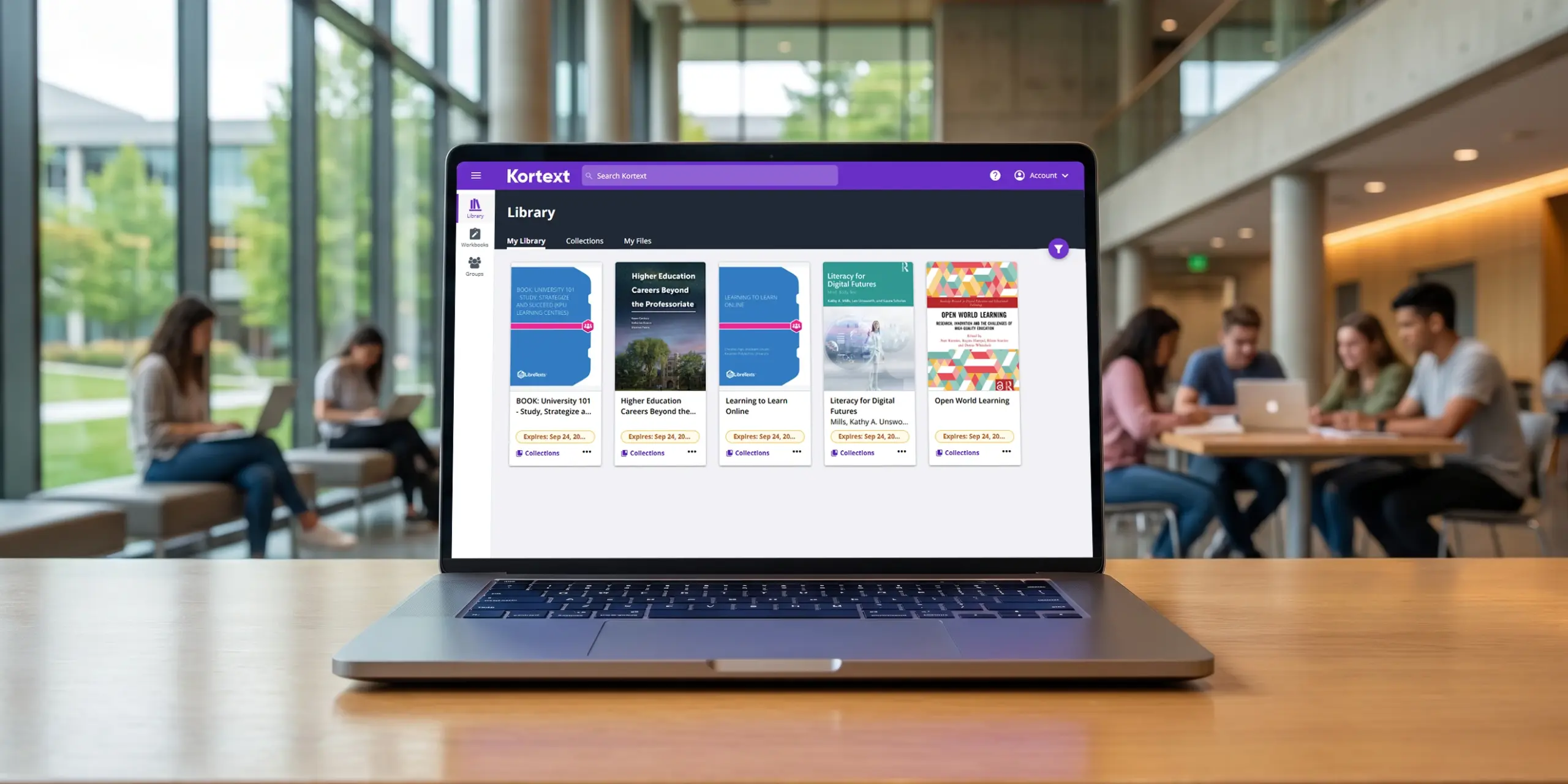
Using Kortext for academic reading
Okay, so, we’ve covered what academic reading is, and how to do it, but how does Kortext help you master active reading?
- First of all, you need to check whether a book is relevant for its intended purpose. Check out the date of publication. Is it out of date? Whilst older information isn’t necessarily useless, it may not be strictly relevant and therefore has the capacity to invalidate any point you make if newer information largely contradicts it.
- On Kortext, you can read the book information without opening the book by tapping on the three dots to see whether it is relevant and whether the topics covered are useful.
- Open the book and skim the contents of the book and the introduction to understand the approach the author is taking
- Use Kortext’s search tool to search the text for what you need faster
- When you have found something you may need, you can highlight it, make a note, copy the reference or bookmark the page for later use.
Ready to begin your academic reading journey?
Tap here to log in!