

Meeting student expectations in a blended learning environment
This year has witnessed a rapid evolution in teaching and learning with a number of pre-existing digital trends in higher education being accelerated and immediately adopted. Due to the pandemic, blended and online learning has become the strategic priority for universities worldwide, but this shift away from face-to-face teaching has created challenges for libraries, academics, and students alike.
The recent WonkHE/StudentsUnion poll found that, across a broad cross-section of institutions, whilst 54% of students are satisfied with their academic experience a significant amount are not. This dissatisfaction is driven by a lack of access and social interaction rather than blended learning per se. Despite most universities adopting this approach, face-to-face contact hours have decreased with much teaching moving online. This has led to a lost sense of community, with students experiencing a lack of belonging and connectedness with their institutions and distance from their peers. Consequently, rates of loneliness and stress in students are high, along with concerns about academic progression.
Kortext’s reach within UK universities gives it a unique data-driven perspective on student engagement with online learning materials. Early data shows a huge increase in usage with over 20 million pages accessed within the first month of the semester. The most startling insight from the data is the significant difference seen from institutions where Kortext is accessed via a VLE, to those where access is through other discovery tools. The key differences were, longer study time, more pages accessed, and a greater number of personal annotations.
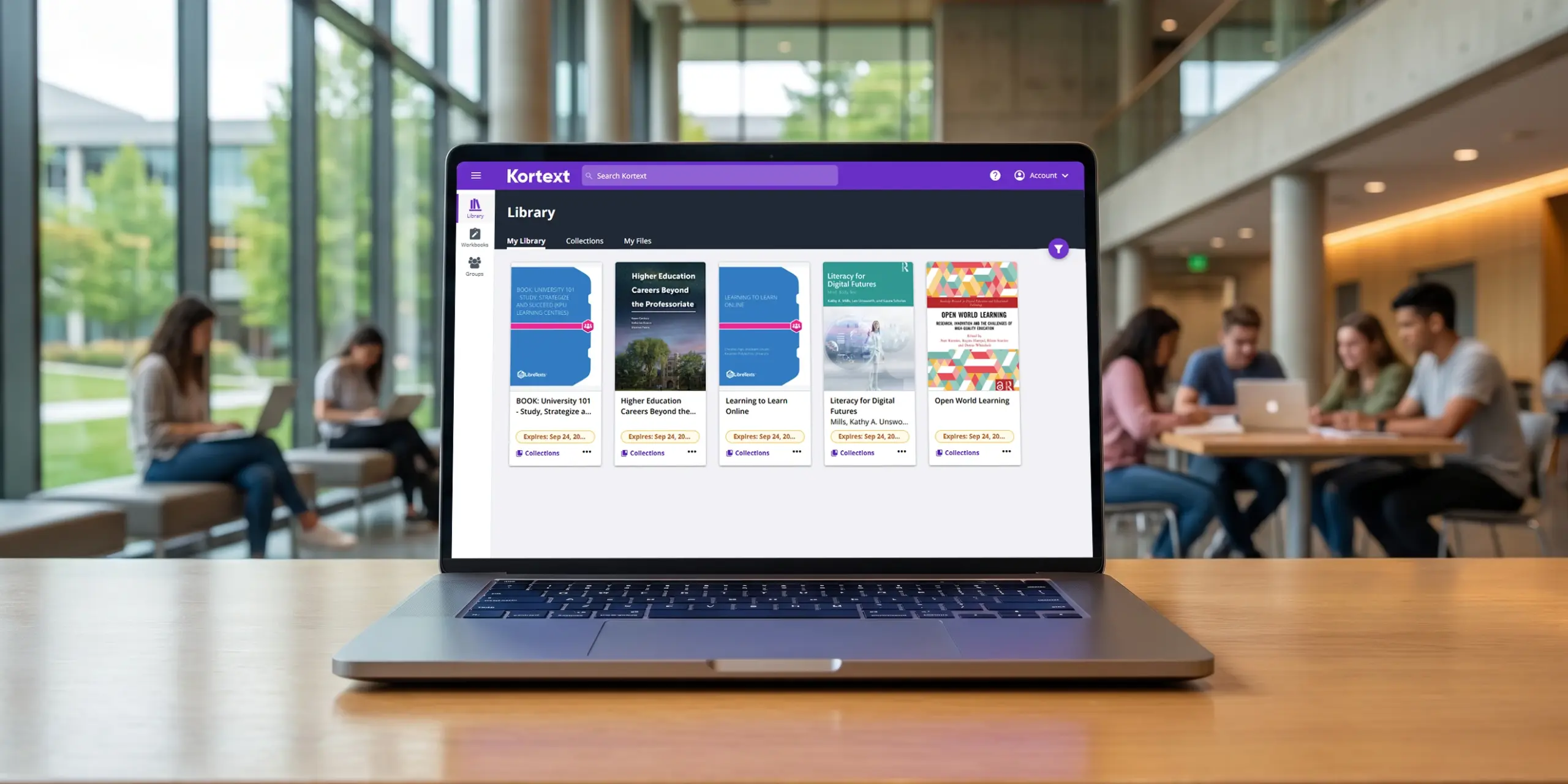
Despite its many challenges, this year has seen libraries and universities adapt to the unprecedented situation by grasping the unique opportunity to redefine and redesign the higher education experience. Kortext is paving the way for accessible online learning solutions. The platform has numerous built-in features to support integrated learning for all, including 24/7 aggregated access, both online and offline through the Kortext app. Key features that drive usage are; highlighting, annotating, bookmarking, keyword search, and inbuilt group functionality which allows students to connect with their peers and tutors to work collaboratively.
It has also been a year of unprecedented change for Kortext. So much has been learned from our library partnerships, which will shape the development of the Kortext smart learning platform to further optimise access and support student outcomes. Our case studies demonstrate how Kortext can impact Institutions to drive student engagement and satisfaction. Contact Kortext to learn more about the topics discussed here.