
Space – an open access collection
Each year on 20 July, Moon Day commemorates the anniversary of the Apollo 11 Moon landing in 1969, when the first humans walked on the lunar surface. Recognised around the world, the day celebrates one of humanity’s greatest scientific achievements and the spirit of space exploration that continues to drive discovery today. More than half a century later, space research extends far beyond the Moon itself, helping us better understand the universe and our place within it.
To mark Moon Day, we’ve selected five open-access titles that explore the scientific, philosophical and human dimensions of our relationship with space.
1. Astronomy 2e by Andrew Fraknoi, David Morrison and Sidney Wolff
For anyone looking to build a solid foundation in astronomy, this book offers an accessible introduction to the subject. Written in clear, non-technical language, it guides readers through key astronomical concepts while using analogies, illustrations and examples from everyday life to make complex topics easier to understand.
Updated to reflect recent discoveries and developments in space exploration, the book provides a broad overview of our current understanding of the universe. Its approachable style makes it particularly well suited to introductory astronomy courses and anyone with a general interest in space science.
2. Exploring Ethnography of Outer Space by Jenia Gorbanenko, David (Jeeva) Jevendrampillai and Adryon Kozel (eds.)
Space exploration is often viewed through a scientific lens, but it also raises important questions about culture, society and humanity’s future. This collection explores how ideas about space influence life on Earth and how humanity imagines its future beyond our planet.
Through contributions from emerging and established scholars, the book examines how communities, institutions and technologies shape our understanding of outer space. By connecting earthly experiences with humanity’s ambitions beyond our planet, it offers a unique perspective for anthropology, sociology and human geography students.
3. Fundamentals of Dark Matter by Ignacio Ferreras
Despite decades of research, dark matter remains one of the greatest mysteries in modern astrophysics. This book provides a thorough introduction to the evidence behind this unseen component of the universe and the role it plays in shaping galaxies and large-scale cosmic structures.
Designed with students in mind, the book includes learning outcomes, discussion questions and thought-provoking exercises that encourage critical thinking and technical understanding. Tracing the development of dark matter theory from early observations to contemporary research, it is an informative and engaging resource for astrophysics, astronomy and cosmology students.
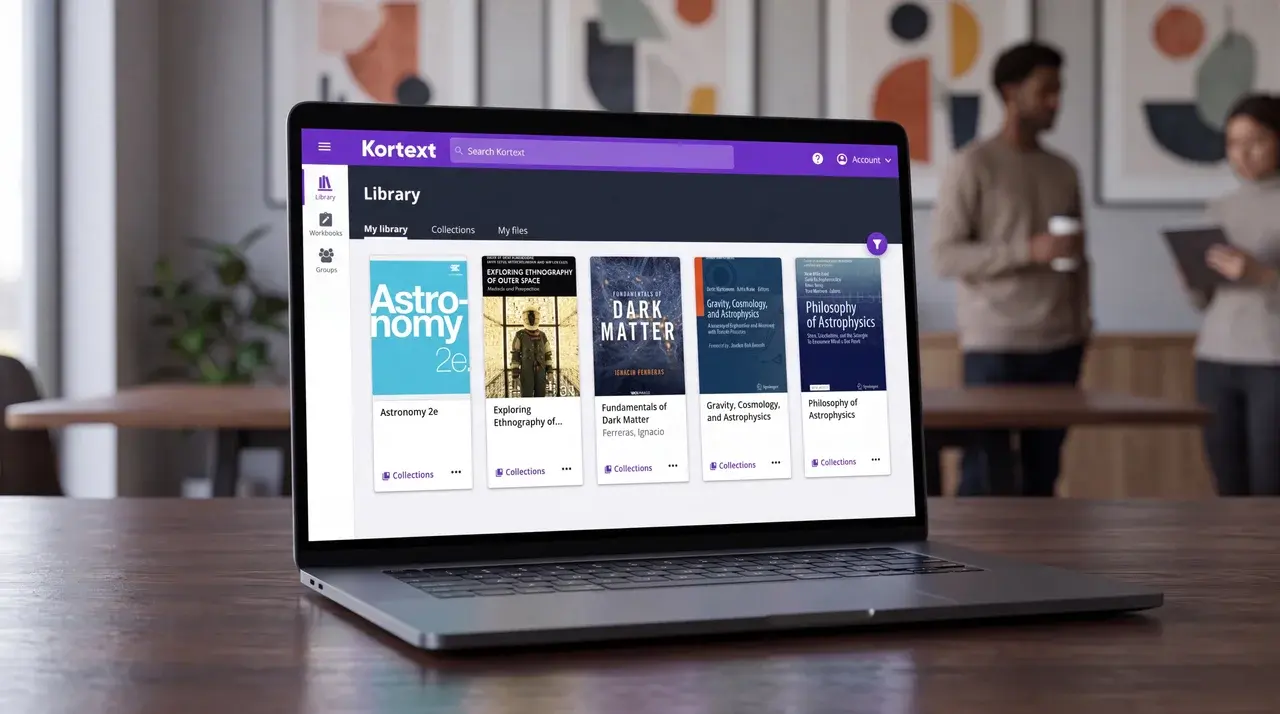
4. Gravity, Cosmology, and Astrophysics by Betti Hartmann and Jutta Kunz (eds.)
Through a series of accessible essays, readers are introduced to topics such as gravity, black holes and the structure of the universe, while examining the theories that help scientists understand them.
By showcasing contributions from female scientists working across the field, it also provides an opportunity to engage with the diverse voices advancing our understanding of the cosmos. It is particularly suited to physics, astrophysics and cosmology students seeking a broader perspective on contemporary space research.
5. Philosophy of Astrophysics by Nora Mills Boyd, Siska De Baerdemaeker, Kevin Heng and Vera Matarese (eds.)
Scientific discoveries often raise deeper questions about how knowledge is created, tested and understood. This edited collection examines the conceptual and methodological foundations of modern astrophysical research, exploring the ideas and assumptions that shape how we study the universe.
Covering topics such as black holes, scientific modelling and observation, the collection encourages readers to think critically about how scientific understanding develops. As an accessible introduction to a growing field, it is well suited to philosophy students, astrophysics students, researchers and anyone interested in the intersection of science and philosophy.
To access the full collection, contact your Kortext Account Manager for more information.
You don’t have to be an existing Kortext customer to benefit from our Open Resources Collection. To find out more, talk to us today.